Natural Cleaning Tips for Maintaining Wooden Furniture and Floors
Before cleaning wood, find out what protects it. A sealed surface, such as many varnished or lacquered pieces, may tolerate a lightly damp cloth; waxed, oil-finished, unfinished, worn, or damaged wood can react differently. Check the maker’s care instructions if they are available. If you do not know the finish, test a proposed cleaner on a hidden spot and let it dry completely. Stop if the area looks dull, sticky, lighter, darker, or otherwise changed.
- Identify the finish of your wood before cleaning; test any cleaner on a hidden spot first.
- Use minimal moisture for cleaning; a lightly damp cloth is often sufficient for routine tasks.
- For spills, blot promptly with a soft cloth to avoid spreading; do not rub the surface.
- Be cautious with 'natural' cleaners; acidic or abrasive ingredients can damage wood finishes.
That finish-first approach matters more than whether a cleaner is labeled “natural.” Vinegar, lemon juice, baking soda, and oils can all affect wood or its protective coating. For routine care, use the least moisture and mildest cleaner that will do the job.
Keep the cleaning kit simple
A soft microfiber cloth or another clean, nonabrasive cloth is enough for regular dusting. For floor edges, grooves, and other hard-to-reach spots, use a soft brush or a vacuum attachment designed for floors. Check that the attachment is clean and will not scratch the surface.
For occasional grime on a compatible finished surface, keep mild soap and clean water on hand. Choose a product suitable for the finish, and dilute it according to its label rather than guessing at a stronger mix. Use a separate clean cloth to remove residue and a soft towel to dry the wood.
Skip abrasive pads, gritty powders, and untested homemade mixtures. A pantry ingredient can still scratch a surface, leave a film, or dull a finish. Avoid spraying any cleaner directly onto furniture or floors: liquid can collect at seams, joints, and edges before you can wipe it away.
Clean furniture with as little moisture as possible
Dust regularly with a soft, dry cloth. Where practical, follow the grain and lift grit rather than rubbing it across the surface. If dust is caught in carved details, loosen it gently with a soft brush. A dry cloth is often enough; frequent wet cleaning is not necessary for routine dust.
For a sticky spot or everyday grime on a finish that tolerates damp cleaning, first test the method somewhere discreet. Dampen a cloth with water and a small amount of diluted mild soap, then wring it out well. The cloth should feel barely damp, not wet. Wipe the affected area gently, then use a clean cloth lightly dampened with plain water to remove soap residue. Dry the surface promptly with a soft towel.
Do not let liquid pool around joints, hardware, or the edges of a tabletop. If a spot does not lift with light wiping, do not keep scrubbing or increase the cleaner’s strength. Repeated rubbing can wear through a finish, and aggressive treatment may make a stain harder to address later.
Antique, waxed, unfinished, or visibly damaged furniture calls for extra restraint. These surfaces may absorb moisture or respond unpredictably to a cleaner that is suitable for modern finished wood. Follow specific care instructions when available; if the finish is unknown or valuable, ask a furniture-care professional before trying a new product.
Clean wood floors without soaking them
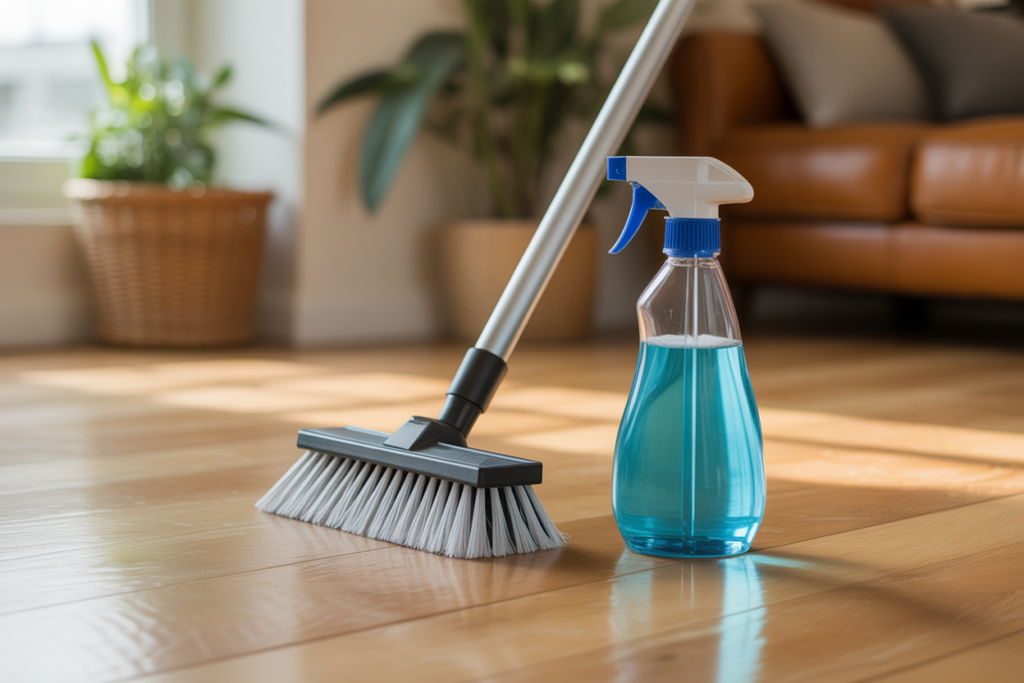
Remove grit before using a damp mop. Sweep, dust-mop, or vacuum with a floor-safe attachment, taking care around edges and under furniture. Small particles dragged under a mop can scratch the finish.
Use a cleaner approved for the floor’s finish and follow its label and the flooring maker’s instructions. If damp mopping is allowed, wring the mop thoroughly and work in manageable sections. The floor should not have standing water or wet patches that linger. Dry any remaining dampness with a clean towel.
Avoid steam cleaners and wet mopping unless the flooring manufacturer explicitly permits them. Excess heat or moisture can damage wood or its finish, and water can seep into seams and edges. If you are unsure whether a floor can be damp-mopped, check its care instructions before cleaning rather than testing on an exposed area.
Treat spills and marks cautiously
Blot a spill promptly with a soft cloth; rubbing can spread the mess or grind grit into the finish. Once the liquid is absorbed, dry the area thoroughly. For food or a sticky mark that remains, try a barely damp cloth only if the surface’s care instructions allow it. If mild soap is appropriate, test it first and wipe away any residue with a clean, lightly damp cloth.
Stop if the finish changes, the wood feels tacky, or the mark does not respond to gentle cleaning. Deep stains, water damage, finish discoloration, and persistent sticky residue may need treatment specific to the wood and its coating. Stronger household cleaners can make the damage worse, so consult a qualified professional when careful wiping is not enough.
Be selective about “natural” remedies

Vinegar and lemon juice are acidic; baking soda and similar powders can be abrasive. Any of them may dull, scratch, or otherwise affect a finish. Their use in other household cleaning tasks does not make them appropriate for wood.
Oils, waxes, and essential oils are not universal cleaners either. A product might be intended to polish or condition a particular surface, but using it on a different finish can leave buildup or change the appearance. Oil-based mixtures should be treated as products that require a compatibility check, not as all-purpose wood care. Do not mix cleaning products, and use a polish or wax only when the product and the surface’s care instructions are compatible.
Cleaning, polishing, and refinishing are separate tasks. Cleaning removes dust or grime; polishing or waxing may add a product to the surface; refinishing changes or renews the protective layer. If the goal is to remove a deep mark or restore a worn finish, repeated cleaning or added oil may not solve the problem.
Reduce the need for washing
Use coasters and placemats on furniture, and wipe up moisture and food spills as soon as they happen. Entry mats help limit grit tracked onto floors; felt pads under furniture legs can reduce scratches. Lift furniture when moving it rather than dragging it across the floor.
Follow the maker’s guidance for ongoing care, especially if the wood is waxed, oil-finished, antique, or covered by a floor-specific finish. With regular dry dusting and prompt spill cleanup, most wood surfaces need less frequent wet cleaning—and less exposure to products that may not suit them.
Frequently Asked Questions
How do I determine the finish of my wood furniture?
To identify the finish, check for any maker’s care instructions if available. If not, test a small amount of cleaner on an inconspicuous area and observe any changes in color or texture once it dries. This can help you figure out how the wood surface may react to various cleaning methods.
What should I use to clean sticky spots on wood furniture?
For sticky spots, first test a damp cloth with mild soap on a hidden area to ensure it won’t damage the finish. If it’s safe, wring the cloth out so it’s barely damp and gently wipe the area, then follow up with a clean cloth dampened with plain water to remove any soap residue. Always dry the surface promptly.
Can I use vinegar or baking soda to clean wood surfaces?
It's not recommended to use vinegar, baking soda, or similar household items on wood surfaces as they can be abrasive or acidic, potentially dulling or scratching the finish. Stick to cleaners specifically designed for wood and always check compatibility with your wood's finish before use.
How can I prevent scratches on my wood floors?
To prevent scratches, regularly sweep or vacuum using a floor-safe attachment to remove grit. Use felt pads under furniture legs and avoid dragging furniture across the floor. Additionally, entry mats can help limit the amount of dirt tracked onto your floors.
What should I do if my wood furniture gets a deep stain?
For deep stains or water damage, it’s best to consult a qualified professional as stronger household cleaners may worsen the damage. If gentle cleaning doesn’t lift the stain, specialized treatment specific to the wood and its finish is often necessary to avoid further issues.